Evolutionary Biology
October 2022 - May 2025
The Why: Regeneration
It’s a no-brainer that achieving an improved rate and quality of wound-healing is one of the main goals in medicine. Studying regeneration (from the scale of cellular to organ-level) across the variety of organisms capable of such a feat increases the likelihood of reinventing medicine as we know it.
One of the animals being extensively studied for its ability to undergo full-body regeneration is a small freshwater worm Pristina leidyi. Widely prevalent in the silty bottom of shallow streams internationally, this annelid is ecologically and experimentally important.
Studying Pristina leidyi helps us understand regeneration’s evolutionary history, cellular mechanics, signaling pathways, and more through developmental, physiological, molecular, and phylogenetic studies.
My undergraduate honors thesis under the supervision of Dr. Alexandra Bely at the University of Maryland was an example of a phylogenetic study on Pristina. Though studied internationally, the diversity of the genus within which P. leidyi is understudied and prior studies pointed to the possibility of cryptic species being present.
My project, titled “Phylogenetic relationships and morphological variation in the freshwater meiofaunal annelid genus Pristina”, focused on untangling the evolutionary history the genus through the generation of the genus’ first molecular phylogenetic tree.
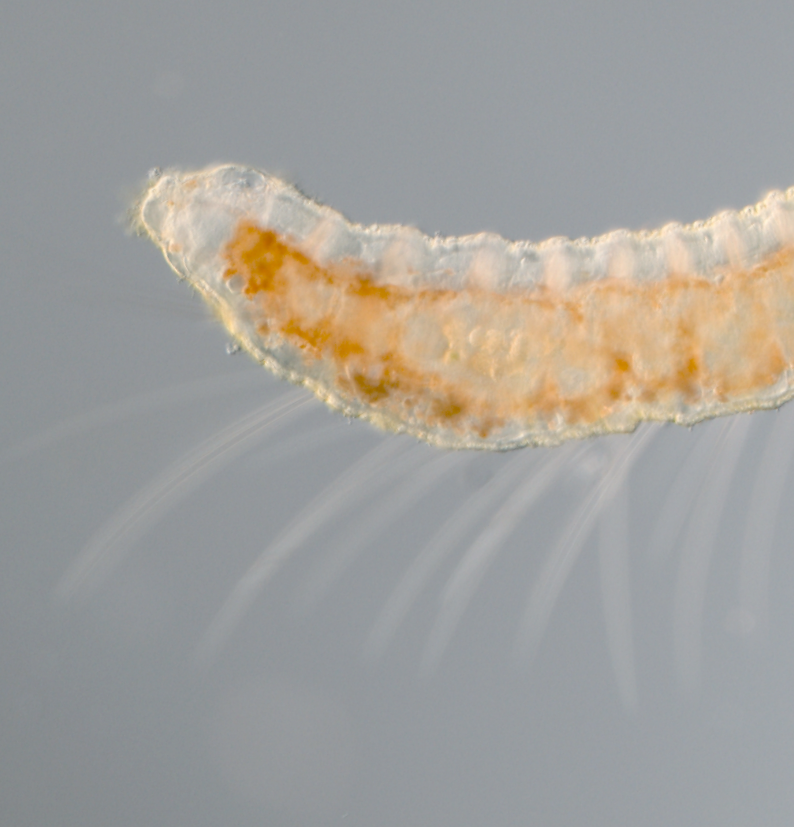
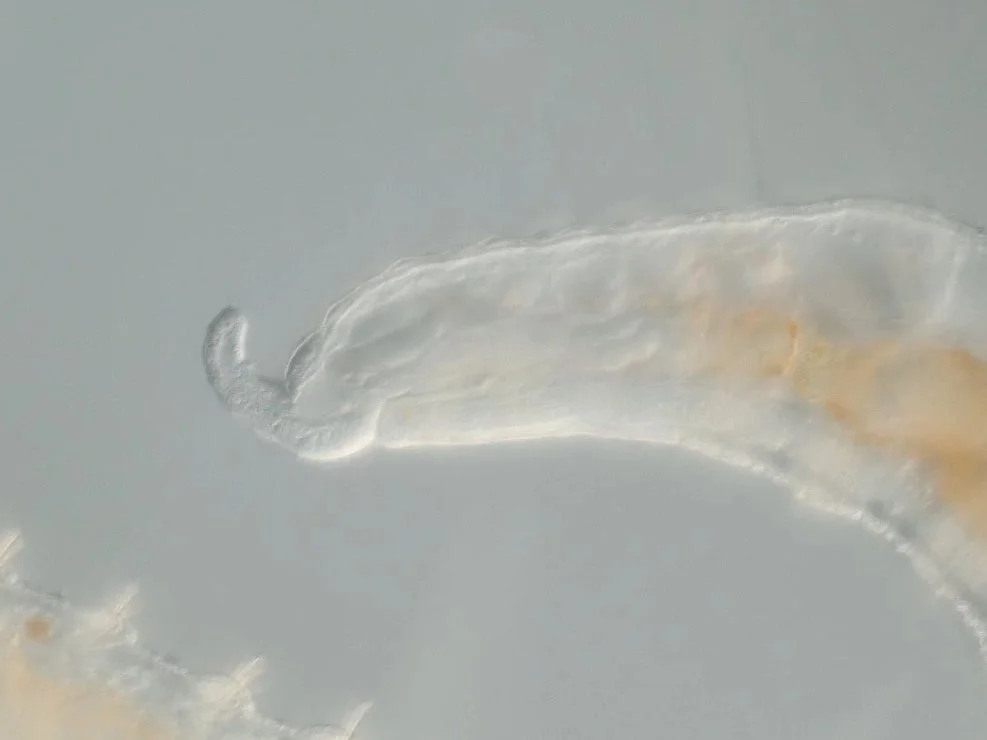
Images demonstrating variation in regenerative ability from P. leidyi five days post amputation of anterior segments in an HSP70 drug trial between a worm exposed to 4 µm (above) versus a worm in spring water (below). Note the lack or presence of the proboscis as an indicator of regeneration success.