Evolutionary Biology
October 2022 - May 2025
Imaging
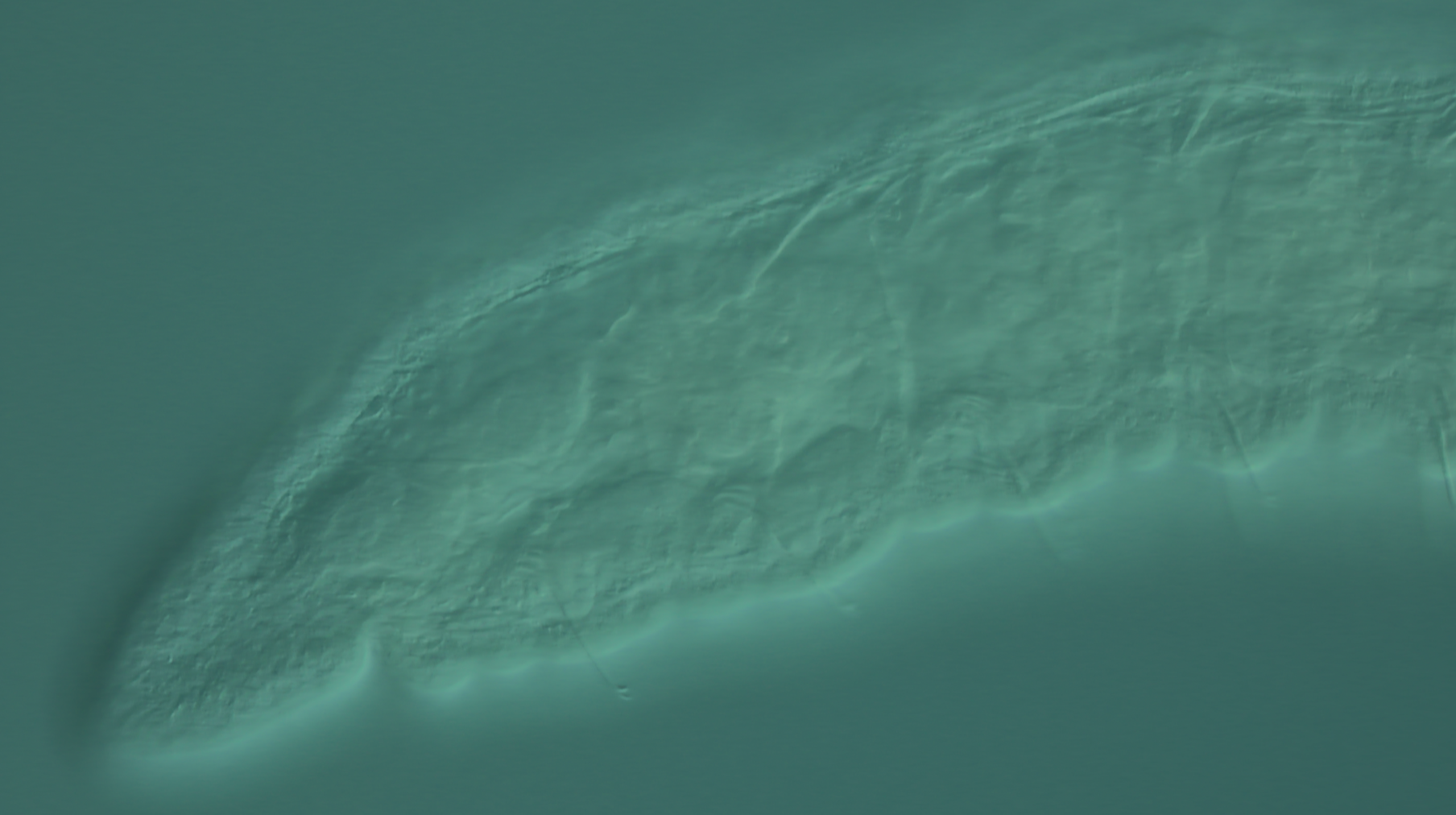
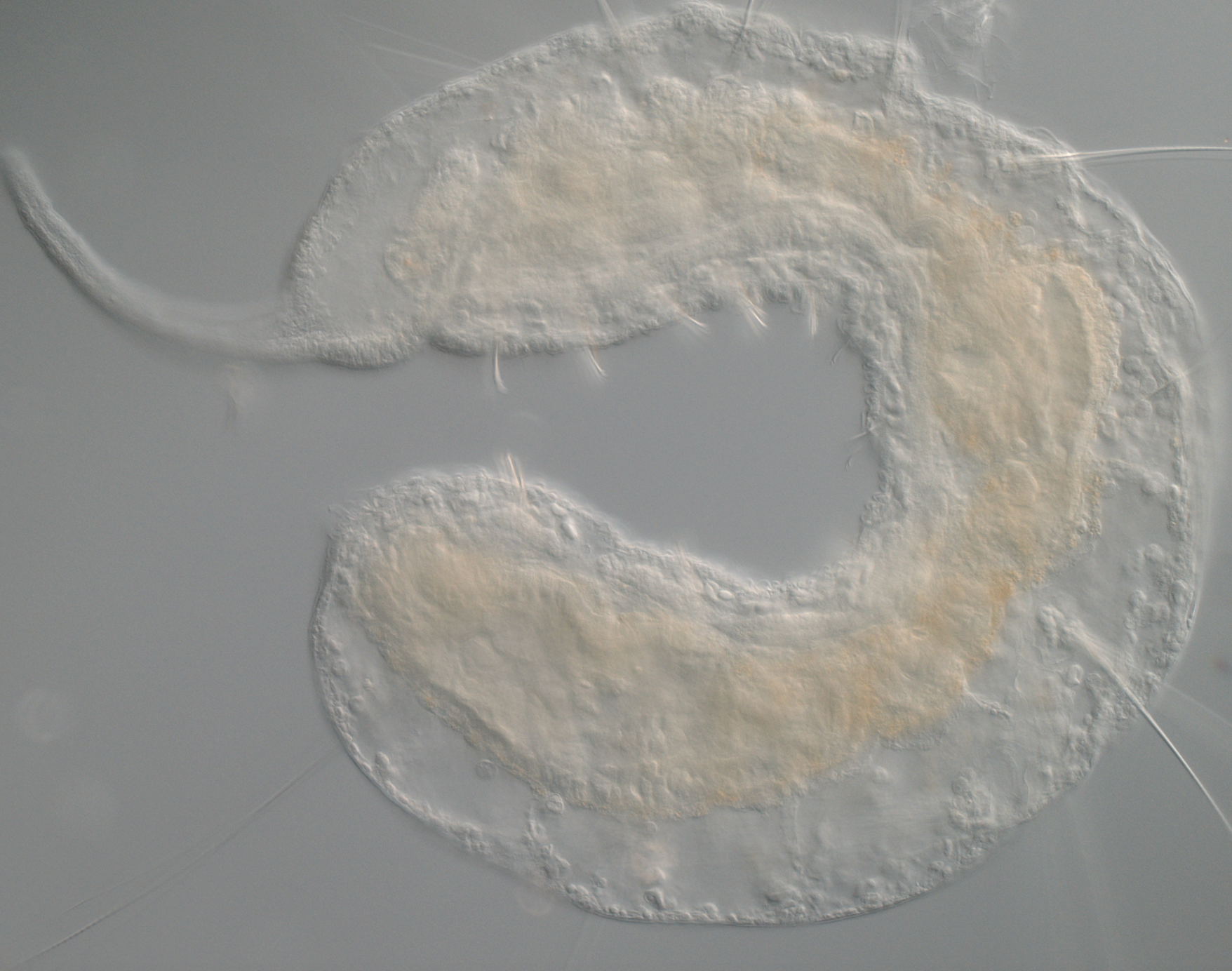
After field sampling and extraction from a sediment sample, each Pristina specimen's behavior was recorded on a Leica MZ16 stereomicroscope equipped with a camera. Full body images were also taken at magnifications between 4x and 10x. I noted the proboscis length as short, medium, long, or absent for each specimen. Then, the specimens which had been fixed in 70% ethanol were rinsed to 1x PBS and finally to 75% glycerol/25% PBS. I mounted the anterior regions on glass microscope slides and they are retained in that way for future study.
I imaged the mounted heads again. The anterior region was imaged at 40x magnification on a Zeiss Axioplan2 microscope to capture the internal anatomy, proboscis length, and chaetal characteristics (e.g., the length, thickness, and ratio of length of distal/proximal chaetae teeth).
These characteristics were used to carry out species identifications using the keys Brinkhurst (1986) and Sperber (1948). Identifications were based on the presence/absence of a proboscis, presence/absence of extended dorsal chaetae on segment III, and the ratio of the chaetal teeth.
A limitation of this study was that all the species identifications are preliminary, as additional observations—i.e., serrate or non-serrate dorsal hairs, the number of chaetae per bundle, and analysis of chaetae across segments—are necessary to improve confidence in Pristina identifications. These features were not consistently assessed as a result of time constraints and the degradation of several specimens due to the preservation process.