eDNA
June 2024 - August 2024
Fieldwork Sampling
During my time as a NOAA William M. Lapenta intern, I was lucky to participate in a few field sampling efforts. Though the field sampling I was involved in was to monitor water quality and pollution sources via nutrient, chlorophyll, and microbial analysis (a different project than my internship focus), we were using methods very similar to those previous scientists used to collect the data I was analyzing.
I went to several offshore sampling sites in Biscayne Bay to collect water samples for eDNA analysis. At each site, another scientist used a Secchi disk to record the water clarity. Another researcher would also collect readings of temperature, salinity, and dissolved oxygen.
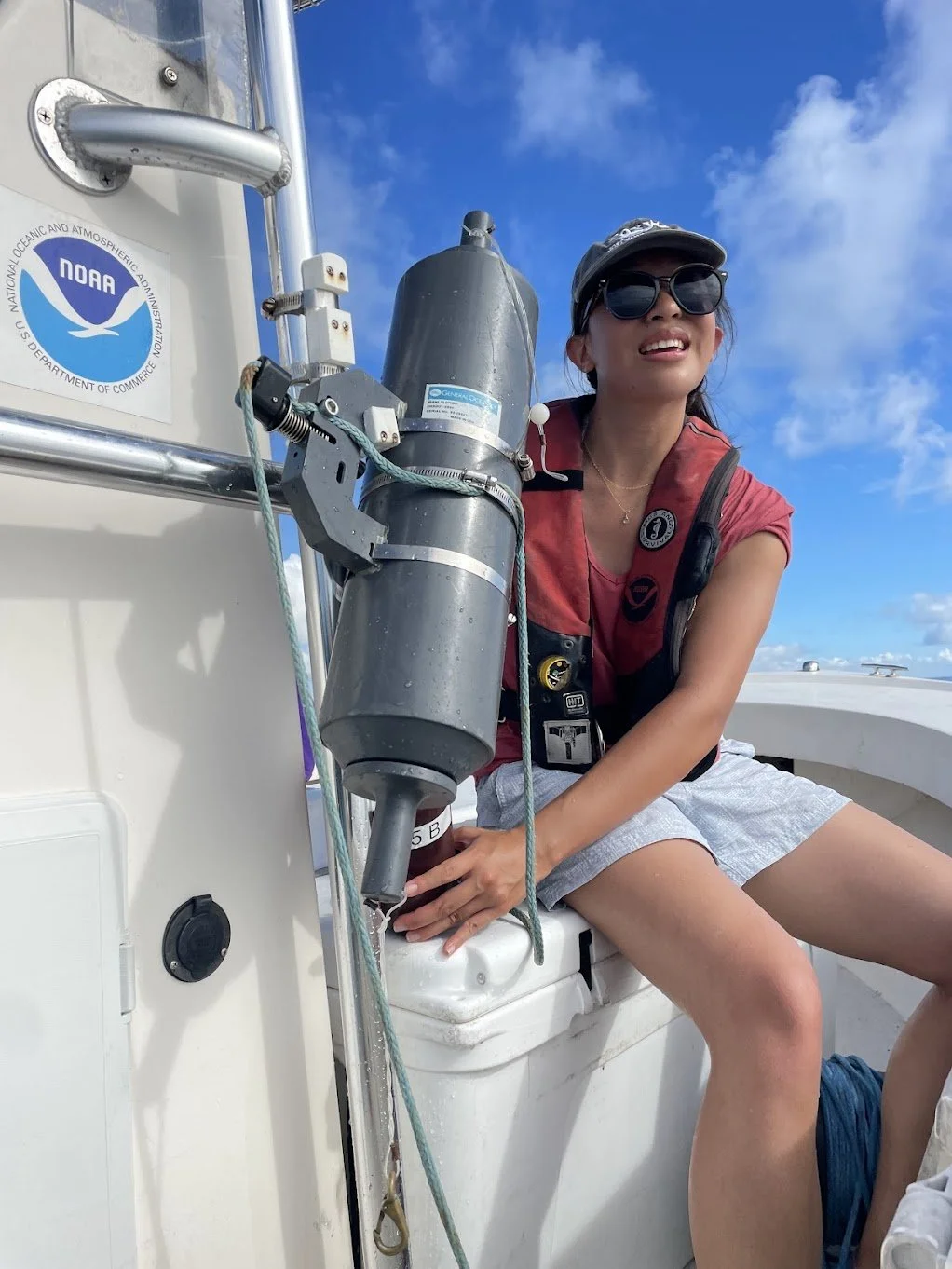
Meanwhile, I and other interns lowered Niskin bottles hand over hand down a line until hitting bottom or (if the site was deep) to the end of the line. At that point a messenger weight was sent to trigger closure of the Niskin bottle cap, thereby collecting a water sample at the desired depth.
The bottle was hauled overboard and placed on a hook for sample collection. pH measurements were taken and dark plastic storage bottles were triple rinsed with the sample water before being filled and placed into a plastic cooler on ice. After returning to the lab, I also learned how water samples are filtered for chlorophyll analysis.