eDNA
June 2024 - August 2024
DNA Extraction
My NOAA internship project involved learning applications used to investigate amplicon sequence data to characterize microbial assemblages over space and time through repeated eDNA observations from the East Florida coast, all in the context of environmental drivers such as temperature, salinity, and dissolved oxygen.
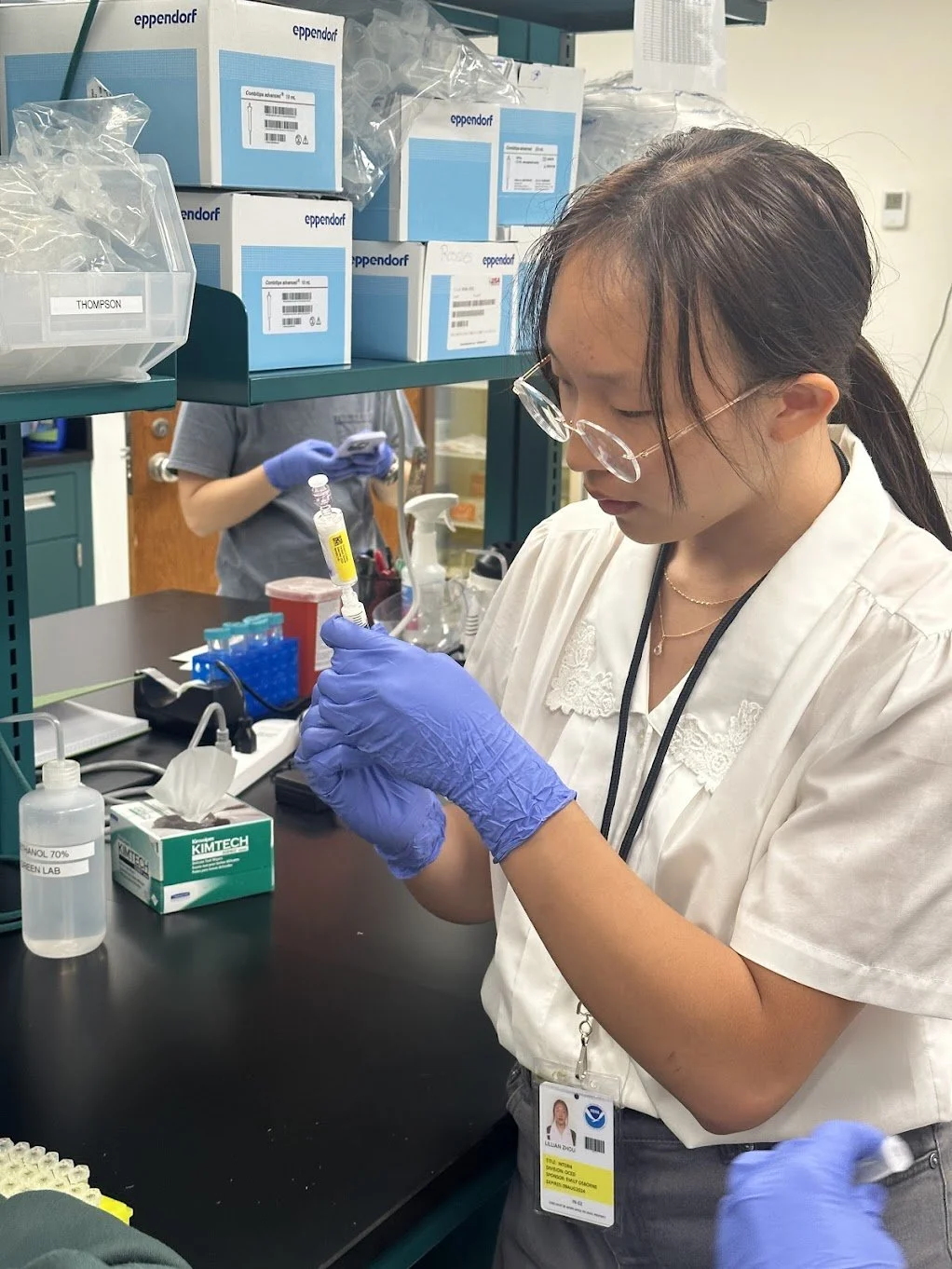
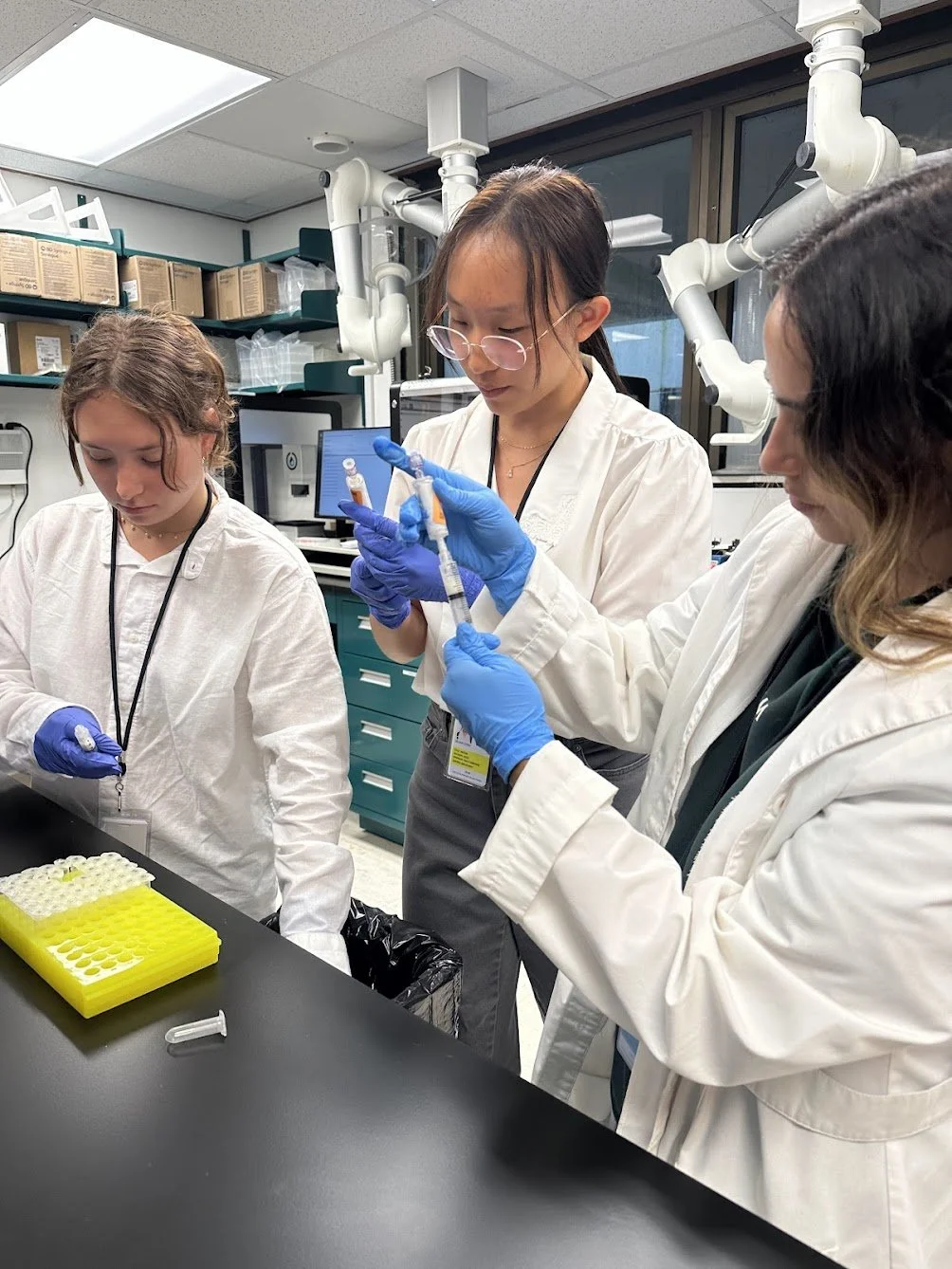
The eDNA I was trying to pick up were from marine eukaryotic microbes and zooplankton. In the lab, I passed water samples through Sterivex filters before spinning them down. I used multichannel pipettes and liquid handling robots to carry out DNA extraction and PCR on a large volume of samples all targeting the eukaryotic ribosomal small subunit 18S. These amplified samples were sent out for sequencing.
To analyze the sequencing data with the ancillary environmental and sample site metadata I used a Jupyter notebook running Python (specifically the Pandas and Seaborn packages) as well as Tourmaline, an amplicon workflow used to process sequences and data visualization/generating statistics reports. Lastly, I utilized QIIME2 to visualize data trends and generate figures for presentation.
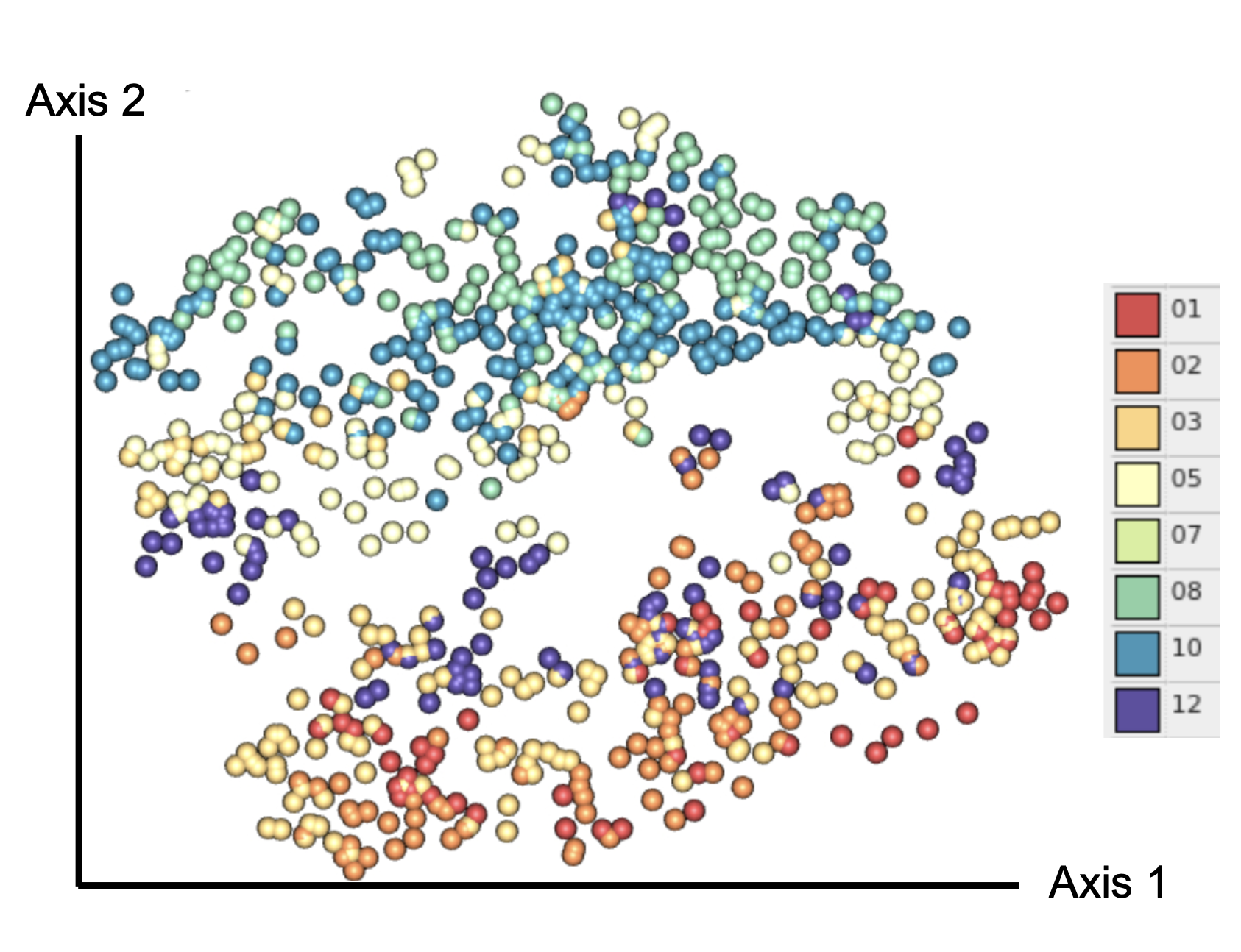
PCA of eDNA sample dissimilarity colored by seasonal variation in time of sampling and ocean temperature